Delivery advice for purchasers: Pack and Send. Installation Advice For purchasers: Place and enjoy


145: Inge King
Hanging Sculpture (Seaflower Maquette) | 1974
$7,500
| Weight | 1 kg |
|---|---|
| Dimensions | 15 cm × 27.5 cm × 15 cm |
| Filter Medium | Metal, Steel |
| Location | |
| Medium | |
| Editions | Unique |
| Catalogue number | 145 |
Hanging Sculpture (Seaflower Maquette), 1974 is a creative response to Inge’s time in Japan, 1974, after which she made a series of pipe sculptures. These were inspired by huge ventilation ducts from the underground at Shinjuku station, Tokyo. A much larger version was fabricated in 1974-75 and is in a Melbourne private collection.
Intended either to hang from a ceiling or to stand upright on its base. From Inge’s private collection and inscribed with ‘PC’ which indicates her high regard for work.

SOLD
Delivery advice for purchasers: Pack and Send. Installation Advice For purchasers: Place and enjoy
To : Sculpture on the Farm
Hanging Sculpture (Seaflower Maquette) | 1974 Sculptor Bio
Inge King
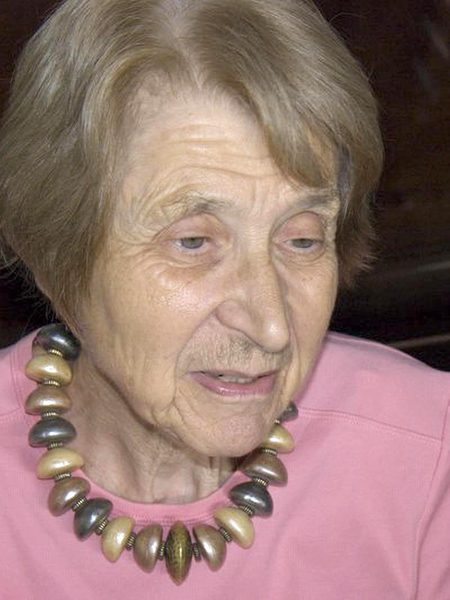
Inge King (1915 – 2016)
Born in Berlin in 1915, Inge left Germany for London in mid-1939. She studied first at the Royal Academy in London and then at the Glasgow School of Art. In 1947, Inge moved to the Abbey Art Centre, an artists’ community near London, where she met her future husband, Australian painter/print maker, Grahame King.
In early 1951, the Kings arrived in Melbourne where they were to work and live for the remainder of their long lives. While it was challenging for Inge to adjust to Australia’s culturally staid, conservative environment, the house the Kings’ built in bushy Warrandyte and the birth of their children provided a degree of stability after the tumultuous war years. These early works saw Inge at the fore-front of the development of non-figurative sculpture in Australia. She was also a founding member of the renown Centre 5 group of sculptors, whose aim was to “help foster greater public awareness of contemporary sculpture in Australia”.
Over the decades King’s sculptural vision and style evolved and changed. She abandoned the black painted boulder-like structures of the 1960’s for steel ground by hand. Rough steel sheets gradually transformed into precise, sleek, elegant curves culminating in her iconic, monumental wave-like sculpture, Forward Surge, situated in the arts precinct in St Kilda Road. This Melbourne landmark encapsulates her notion that sculpture should be interactive, and she took much pleasure in watching families picnic in its shade and children roller-blade on the curved surfaces.
Flight and movement have always fascinated King, and assemblage (3-dimensional elements projecting out) enabled her to let forms be air-borne, balance shapes or anchor them precariously. Many of King’s large-scale works are found in public spaces and on university campuses around Australia.
Galleries
Every major gallery in Australia owns one or more of her sculptures and she has work in the UK, USA and Germany. King was made a Member of the Order of Australia (AM) in January 1984 and was given the Visual Arts Emeritus Award in recognition of her central role in raising the profile of modern sculpture in Australia.